Brain-Body Interactions


All of the time, we need to optimally adjust behavior according to the present mesostate: a continuously fluctuating combination of peripheral and interoceptive signals that reflect physiological states such as hunger, thirst or sexual drive as well as emotional states and sensory input derived from the environment.
If we are unable to adjust behavior according to these peripheral and interoceptive signals, we fail to satisfy current needs and exploit current opportunities.
Maladaptive behavior is both a symptom of and a contributor to many neuropsychiatric disorders such as mood or eating disorders. In this regard, maladaptive behaviors are both a window into the brain dysfunction of neuropsychiatric disorders and a mechanism that perpetuates and worsens them.
Research
Behavioral prioritization
Interoceptive processing
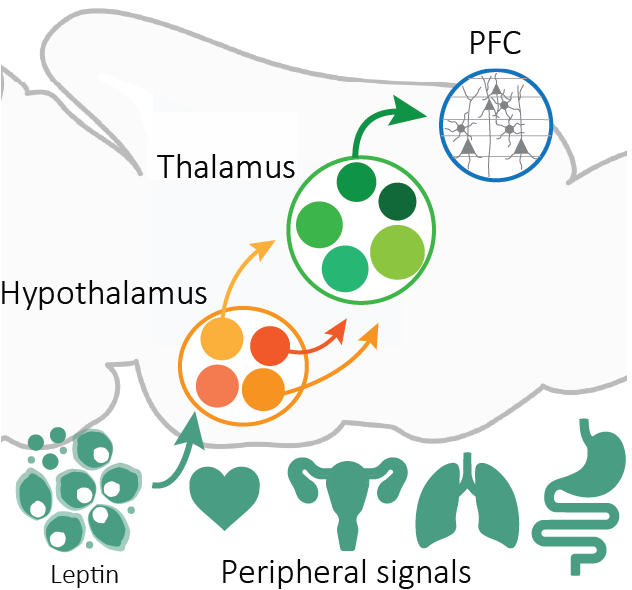
The integration of peripheral and interoceptive signals relies on many specialized neuronal populations in the hypothalamus. We propose that hypothalamic areas process peripheral signals indicative of the mesostate and convey the integrated input to executive control centers via medial thalamic nodes to inform adaptive action planning.
Our goals
We chart the conserved and specialized routes of communication between peripheral signals and their hypothalamic and cortical neuronal targets. Currently, the lab is focused on two research lines:
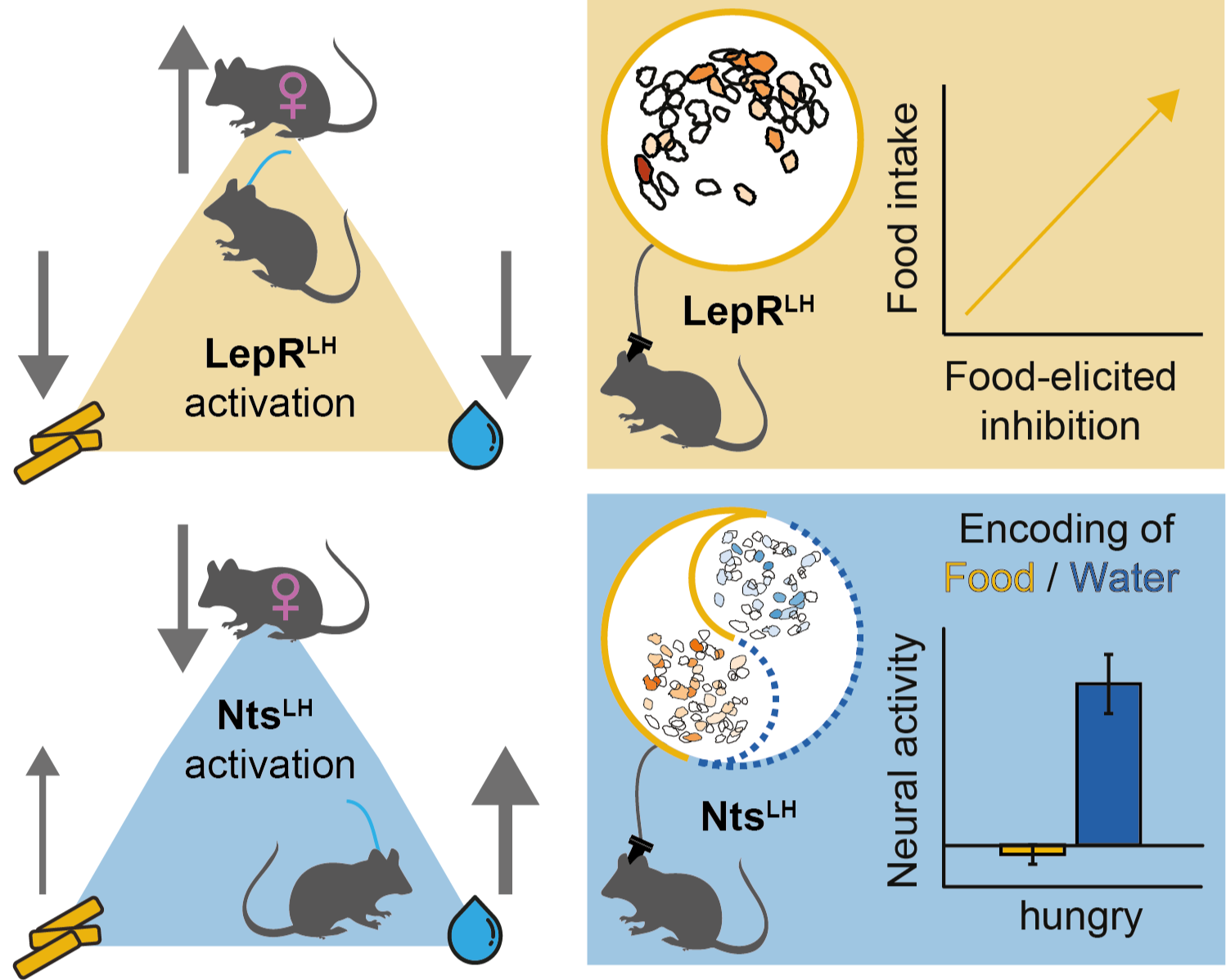
1. Investigation of the neuronal mechanisms that enable distinct hypothalamic populations to sense peripheral signals and balance competing needs accordingly.
2. Delineation of the hypothalamo-thalamic output circuits to executive cortical centers that convey state-sensitive hypothalamic input to inform adaptive action planning
Our approach
We uncover how peripheral signals from the body inform subcortical networks of the brain to modulate essential innate behaviors according to physiological needs and environmental opportunities.
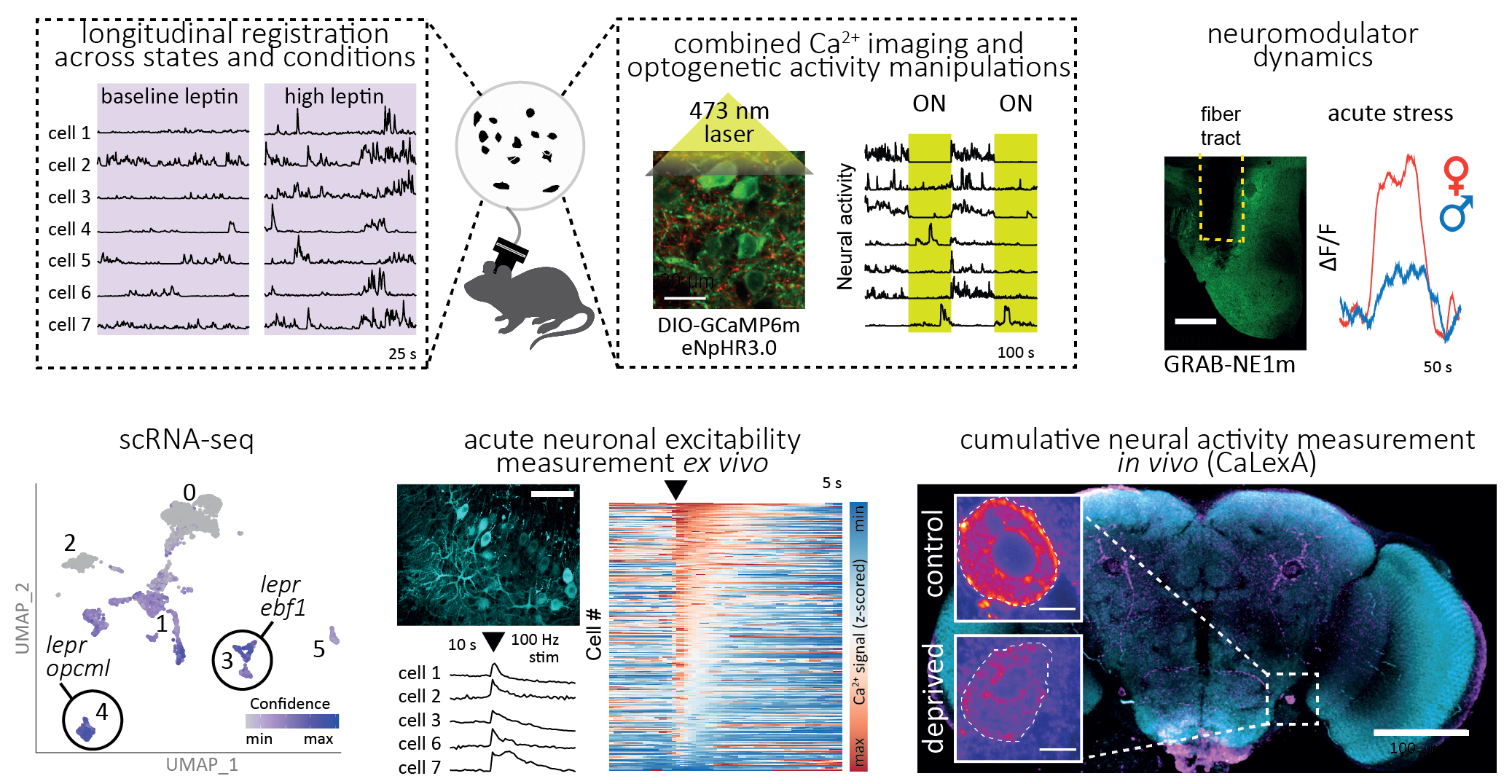
For this purpose, we employ a multi-level approach that encompasses the molecular characterization of the relevant neuronal populations using transcriptomics and in situ hybridization, the characterization of their spontaneous activity dynamics in vivo using single-cell calcium imaging in freely moving animals, and testing their behavioral relevance using cell type-specific activity manipulations.
Team
-

Anne Petzold
GROUP LEADER
Anne received her PhD from Imperial College London for her work on molecular genetics of sleep in fruit flies. Her main postdoctoral work was focused on the role of leptin-sensitive circuits for innate behavior control at MPI Metabolism and the University of Cologne, before starting her group at the European Neuroscience Institute in the end of 2024. -

Carolin Schumacher
PHD CANDIDATE
Carolin’s science journey started out at Miltenyi Biotec with an apprenticeship as a Biology Laboratory Technician. She then moved on to obtain her BSc Cognitive Science and her MSc Experimental and Clinical Neurosciences. Currently, she investigates the role of specialized hypothalamic populations for the control of innate and learned behaviors. -

Gabriela Neubert da Silva
PHD CANDIDATE
Gabriela obtained her BSc Biomedical Sciences and MSc Pharmacology in Brazil before taking up a research assistant position in the Batista-Brito lab in New York. Gabi joined the lab to focus on sex-specific aspects of interoceptive information processing. -

Sophie Raspe
MSC CANDIDATE
Sophie received her BSc in Biology from the University of Greifswald and is currently enrolled in the MSc program in Developmental, Neural and Behavioural Biology in Göttingen. She joined the group to gain hands-on research experience as part of her Master’s thesis.
-

Richard Jensch
MSC CANDIDATE
-

Come join us!
We’re hiring
Alumni
2025
Kriti Johri, BSc Neuroscience, Trinity College Dublin
2024
Sude Öztürk, BSc Molecular Biology and Genetics, İzmir Institute of Technology
Deema Awad, BSc Neuroscience, University of Cologne
Marla Witt, BSc Neuroscience, University of Cologne
Publications (selected)
-
![]()
Complementary lateral hypothalamic populations resist hunger pressure to balance nutritional and social needs.
Petzold, van den Munkhof, Figge-Schlensok, Korotkova.
Cell Metabolism 35(3):456-471.e6 (2023) -
![]()
A lateral hypothalamic neuronal population expressing leptin receptors counteracts anxiety to enable adaptive behavioral responses
Figge-Schlensok*, Petzold*, Hugger et al.
Nat Neurosci 28, 2262–2272 (2025)
-
![]()
Identification of State-Dependent Encoding of Innate Rewards by Deep-Brain Single-Cell Imaging in Freely Behaving Mice.
Petzold, Figge-Schlensok, van den Munkhof, Schumacher, Korotkova.
In: Rusakov, D. (eds) Fluorescence Imaging of the Brain. Neuromethods, Vol. 209, Humana, New York, NY (2024)
-
![]()
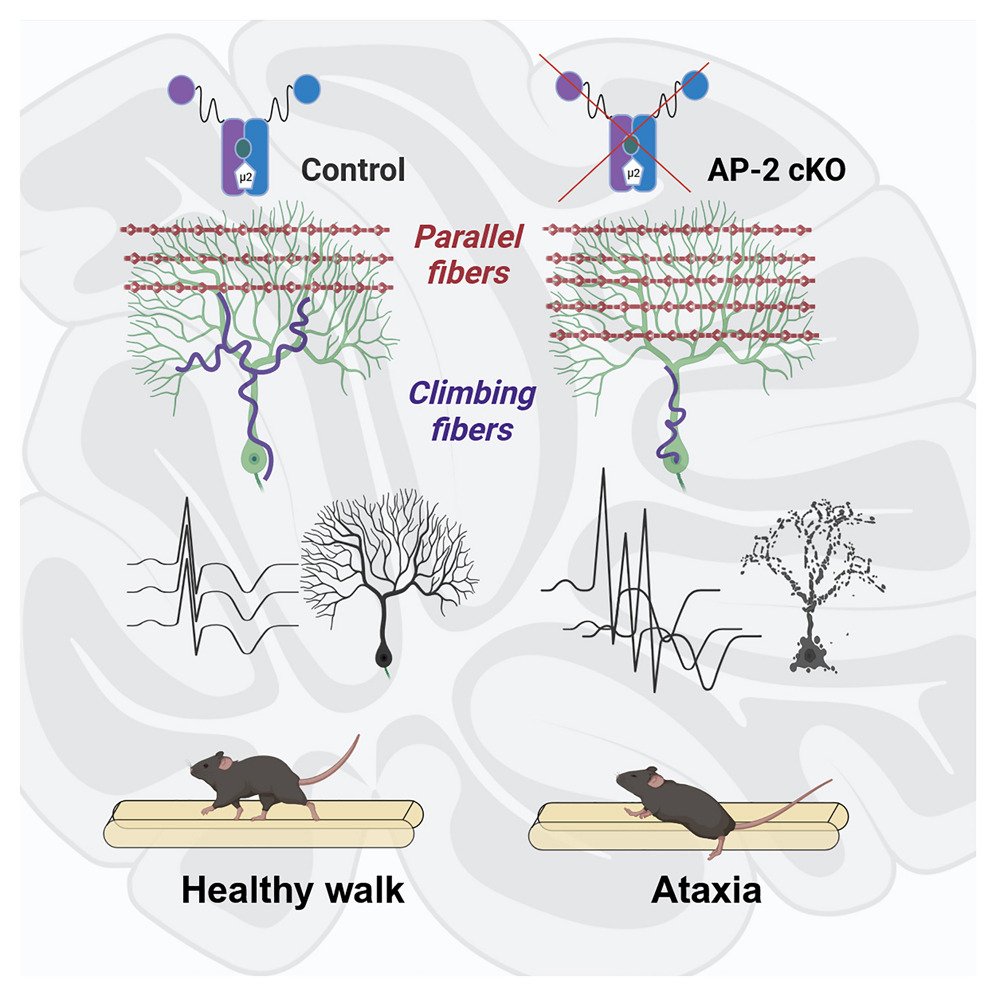
The endocytic adaptor AP-2 maintains Purkinje cell function by balancing cerebellar parallel and climbing fiber synapses.
Tolve, Tutas, Özer-Yildiz, Klein, Petzold, Fritz, Overhoff, Silverman, Koletsou, Liebsch, Schwarz, Korotkova, Valtcheva, Gatto, Kononenko.
Cell Reports 44(2): 115256 (2025)
-
![]()
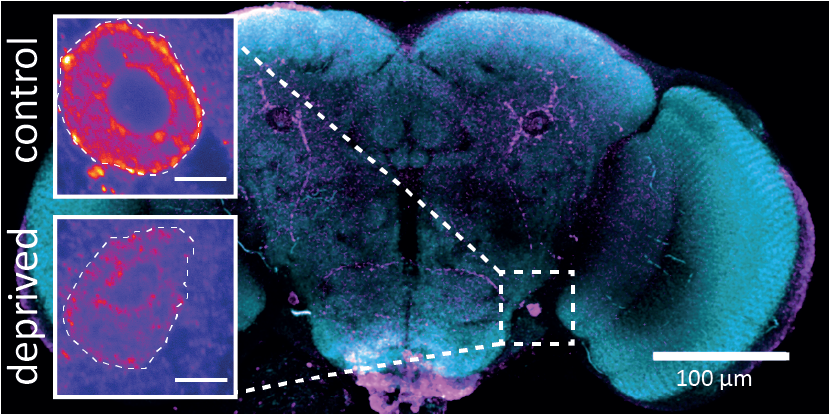
ninna nanna links circadian and homeostatic sleep drive in Drosophila.
Petzold & Gilestro. bioRxiv (2024)

Contact

European Neuroscience Institute, Göttingen
A joint initiative of the University Medical Center Göttingen and the Max Planck Society
Dr. Anne Petzold
European Neuroscience Institute
Grisebachstrasse 5
37077 Göttingen
email a.petzold@eni-g.de
phone 0551 39-61321
neuroadept@bsky.social